Ezymoneydeals

Ezy Money Deals

Costly ITR Filing Mistakes & How to Avoid Them

Common ITR Filing Mistakes That Can Cost You Money (And How to Avoid Them) It might seem easy to file your Income Tax Return (ITR), especially with online forms and pre-filled data. But a single mistake can result in notices, fines, late refunds, or even an investigation. Every year, thousands of Indian taxpayers lose money because they make mistakes when filing their ITR that they could have avoided. In this guide, we’ll talk about the most common mistakes and how to avoid getting an unnecessary income tax penalty in India. Let’s make it easy to understand. 1. Picking the Wrong ITR Form Choosing the wrong return form is one of the most common mistakes people make when they file their ITR. For instance: People who work for a salary usually file ITR-1 or ITR-2. ITR-3 or ITR-4 is used by business owners. If you pick the wrong form: We can treat your return as defective. You might have to file again. It may take longer to get your refund. Always check your sources of income before you file, such as your salary, capital gains, business income, house property, and so on. 2. Not Reporting All Sources of Income A lot of people only report their salary income and forget: Interest on a bank account (FD/RD savings account) Income from freelancing Income from renting Profits from selling stocks or mutual funds Income from abroad Banks, employers, and other financial institutions send this information to the Income Tax Department. A notice may be sent if your income doesn’t match their records. This mismatch is a big reason why people make mistakes when they file their ITRs and get fined. Before you file, check your AIS (Annual Information Statement) and Form 26AS. 3. Making the wrong deductions Claiming deductions when you aren’t eligible is dangerous. Common mistakes: Claiming 80C without putting any money into it Claiming health insurance twice Claiming HRA without proof of rent Incorrectly taking out home loan benefits If you find that your deductions are wrong, you may have to: Tax request Charges for interest What happens if you don’t pay your income tax in India? Fix: Keep proof of every deduction you make. 4. Not verifying your ITR A lot of people file their taxes but forget to check them. An unverified return is not valid. You have 30 days to confirm through: Aadhaar OTP Internet banking EVC Sending the signed ITR-V to the CPC One of the easiest and most expensive mistakes you can make when filing your ITR is not checking. Fix: Always check to see if your return status says “Successfully e-Verified.” 5. Filing After the Due Date Filing late can cost a lot. Here are some of the effects: Fee for filing late: up to ₹5,000;  Tax interest due You can’t carry forward losses, like a capital loss or a business loss. This is what causes income tax penalty India situations. Fix: File before the deadline Category of Taxpayer Due Date for Tax Filing – FY 2025-26 *(unless extended) ITR-1 & ITR-2 31st July 2026  ITR-3 & ITR-4 (Non-audit cases) 31st August 2026 ITR-3 & ITR-4 (Requiring Audit) 31st October 2026 Businesses requiring transfer pricing reports (in case of international/specified domestic transactions) 30th November 2026 6. Wrong Bank Information Refund stuck? It could be because the bank details are wrong. If the IFSC code or account number is wrong: The refund will not go through Processing takes longer Fix: Before you send in your bank information, double-check it. 7. Not paying attention to TDS Mismatch At times: Employer takes out TDS but doesn’t put it in the bank on time The bank takes TDS out of the wrong account. Form 16’s TDS doesn’t match Form 26AS. If you don’t check this, you might get a smaller refund or a tax bill. Before you file, make sure that Form 16, Form 26AS, and AIS all match. 8. Not Paying Self-Assessment Tax You must pay the rest of your taxes before you file if your tax bill is higher than the TDS deducted. A lot of people skip this step and file right away. What happened? Interest under Sections 234B and 234C Notice for unpaid taxes This is one of the most common mistakes people make when they file their ITR that costs them money. Fix: Before you file your ITR, use the tax calculator to pay off your debts. 9. Picking the Wrong Tax System A lot of taxpayers don’t check to see if the old tax system is better because the new one is now the default. If you pick the wrong regime, you might have to pay more in taxes. Fix: Before you file, look at both regimes. Pick the one that saves the most money on taxes. 10. Not telling people about big transactions Big deals like: Getting property Big payments on credit cards  Large investments  Costs of traveling abroad are sent to the tax office. If income doesn’t back up these transactions, they can be looked into. This is another reason why people make mistakes when they file their ITRs. Fix: Make sure that reported income matches financial activities. 11. Not paying attention to notices from the income tax department Some taxpayers don’t pay attention to emails or SMS alerts because they think they are spam. If you ignore a real notice, The penalty may go up. There may be legal problems. Fix: Always check the income tax portal for pending notices after you log in. 12. Not fixing mistakes in time You can file a corrected return before the deadline if you find a mistake after filing. A lot of people don’t do this. What happened? Data that is wrong stays on record Possible consequences of an income tax penalty in India Fix: As soon as you see a mistake, file a new return.   How to Never Make Mistakes When Filing Your ITR Here’s a simple list: ✔ Get all your income papers ✔ Download AIS and Form 26AS

Costly ITR Filing Mistakes & How to Avoid Them Read More »

Health Insurance: How Much Cover Is Enough?

How Much Health Insurance Cover Do You Really Need? Health insurance is one of those things most people know they should have, but very few understand properly. The most common question people ask isn’t whether to buy health insurance—it’s how much health insurance coverage is actually enough. In India, many people are either underinsured or relying completely on employer-provided policies. With rising hospital expenses and increasing medical inflation in India, this approach can be risky. One serious illness or accident can drain years of savings if your coverage isn’t adequate. So let’s answer the real question honestly and practically: how much health insurance cover do you really need today—and how do you future-proof it? Why Health Insurance Coverage Needs Serious Thought Healthcare costs in India have changed drastically over the last decade. Treatments that once seemed expensive are now considered basic. Sometimes a single hospitalization can easily cost ₹5–10 lakh, and for critical illnesses, the expenses can go much higher. The purpose of health insurance coverage is not just hospitalization reimbursement—it’s financial protection, peace of mind, and access to quality treatment without compromise. However, many people: Buy the cheapest policy available Depend fully on corporate insurance Choose outdated coverage amounts Ignore rising medical costs This often leads to unpleasant surprises during claims. Understanding Medical Inflation in India Before deciding how much coverage you need, it’s important to understand medical inflation India. Medical inflation refers to the rate at which healthcare costs increase every year. In India, medical inflation is usually much higher than normal inflation, driven by: Advanced medical technology Expensive diagnostics and procedures Higher doctor consultation fees Rising cost of medicines Increased use of private hospitals What does this mean for you? A ₹5 lakh health insurance policy that feels sufficient today may become inadequate within a few years. This is why buying minimal coverage is one of the biggest mistakes people make. So, How Much Health Insurance Coverage Is Enough? There’s no universal number that works for everyone, but your ideal health insurance coverage depends on a few key factors. 1. Your City of Residence Healthcare costs vary significantly between cities. Metro Cities In cities like Mumbai, Delhi, Bengaluru, and Chennai: Hospital room charges are higher ICU costs are expensive Specialist doctor fees are steep 👉 Recommended coverage: ₹10–15 lakh minimum Non-Metro Cities Costs are slightly lower, but rising fast. 👉 Recommended coverage: ₹7–10 lakh minimum With medical inflation in India, even non-metro cities are quickly catching up. 2. Your Age and Health Condition Many young people feel they don’t need high coverage. This is a risky assumption. Medical emergencies can happen at any age Buying insurance early keeps premiums low Waiting too long may lead to exclusions or higher costs If you’re young and healthy, it’s the best time to lock in higher health insurance coverage at affordable premiums. 3. Family Size and Structure Your coverage should reflect the number of people dependent on it. Individual Policy Suitable if: You’re single You want customized coverage Family Floater Policy Suitable if: You have a spouse and children You want cost-effective shared coverage Parents Insurance Elderly parents should ideally have separate policies, as: Premiums are higher Claims frequency is higher Mixing them into a floater can reduce available cover Larger families need higher coverage because the probability of claims increases. 4. Why Employer Health Insurance Is Not Enough Employer-provided health insurance is helpful—but risky to rely on completely. Common issues include: Coverage limited to ₹2–5 lakh Policy ends when you change jobs or retire No control over features or exclusions Often insufficient against medical inflation India Your employer policy should be treated as secondary protection, not your primary health insurance coverage. A Practical Formula to Calculate Health Insurance Coverage Here’s a simple way to estimate your coverage needs: Option 1: Income-Based Approach Health Insurance Cover = 5× your annual income Option 2: Expense-Based Approach Minimum ₹10–15 lakh for urban families You can choose the higher of the two for better protection. The Role of Super Top-Up Plans One smart way to beat medical inflation in India without paying very high premiums is using super top-up plans. How they help: Increase coverage to ₹25–50 lakh Cost much less than base policies Activate once your base cover is exhausted Example: Base policy: ₹10 lakh Super top-up: ₹40 lakh Total coverage: ₹50 lakh at affordable cost This strategy is becoming increasingly popular among financially aware families. Hidden Hospital Costs People Often Ignore Many people underestimate medical bills because they focus only on surgery costs. Real expenses also include: ICU charges Doctor visits Diagnostic tests Pre- and post-hospitalization expenses Room rent differences Non-medical consumables Choosing the right health insurance coverage means ensuring these costs are covered or reasonably capped. How to Protect Yourself Against Medical Inflation India Medical inflation isn’t slowing down—but you can stay ahead with smart planning. Do This Regularly: Review coverage every 2–3 years Increase sum insured as income grows Add super top-ups instead of buying new base plans Avoid room rent limits where possible Choose lifetime renewability Health insurance is not a one-time decision. It’s an evolving financial shield. Common Mistakes to Avoid Buying the cheapest policy without understanding coverage Ignoring exclusions and waiting periods Relying only on employer insurance Not updating coverage after marriage or children Underestimating medical inflation in India Avoiding these mistakes can save you from financial stress during emergencies. Final Thoughts So, how much health insurance cover do you really need? Enough so that: A medical emergency doesn’t force you to use savings You don’t compromise on quality treatment Your family’s financial stability remains intact With rising medical inflation India, low coverage is no longer safe. A well-planned health insurance coverage—combined with regular reviews and smart add-ons—can protect both your health and your wealth. If there’s one simple rule to remember, it’s this: It’s always better to be slightly over-insured than dangerously under-insured. 👉 Visit: blog.ezymoneydeals.com 📞 Need help? Contact our support anytime — we’re here for you!

Health Insurance: How Much Cover Is Enough? Read More »

8 Insurance Claim Mistakes Causing Rejection

Costly Insurance Claim Mistakes That Can Get Your Claim Rejected Insurance claim sounds simple when you buy a policy, but the real test comes when you actually file one. Many people feel secure after purchasing insurance, yet that security only matters if the claim gets approved without trouble. Sadly, in India, a lot of claims get rejected because of small and avoidable mistakes. Claim rejection usually isn’t about bad luck. In most cases, it happens because of lack of awareness, incorrect documentation, or policy misunderstanding. Many policyholders realize the fine print only after it’s too late. Let’s look at the most common mistakes that cause trouble during claim settlement. 1. Not Disclosing Complete Information One of the top insurance claim rejection reasons is non-disclosure or incorrect disclosure. Examples include: Hiding pre-existing medical conditions Providing incorrect income or age details Not mentioning smoking or drinking habits Even unintentional mistakes can be treated as misrepresentation and lead to claim denial. 👉 Claim settlement tip: Always be honest and transparent while buying the policy. Full disclosure protects your claim. 2. Missing Policy Exclusions Many people assume insurance covers “everything.” It doesn’t. Common exclusions include: Waiting period conditions Specific illnesses or treatments Claims during the initial policy period Ignoring exclusions is a major reason claims get rejected. 👉 Claim settlement tip: Read the exclusions section carefully and clarify doubts before relying on the policy. 3. Delay in Intimating the Claim Insurance companies have strict timelines for claim intimation. Delayed reporting—especially in health and motor insurance—can lead to rejection. 👉 Claim settlement tip: Inform the insurer immediately after an incident or hospitalization, even if documents are pending. 4. Incomplete or Incorrect Documentation Missing documents are a silent claim killer. Common issues include: Incomplete claim forms Missing medical reports or bills Incorrect nominee details Unclear or altered documents This is one of the most frequent insurance claim rejection reasons in India. 👉 Claim settlement tip: Double-check documents before submission and keep copies of everything. 5. Letting Policies Lapse Due to Non-Payment A lapsed policy offers zero protection. Many claims get rejected simply because the premium wasn’t paid on time. 👉 Claim settlement tip: Set auto-debit reminders and always keep the policy active. 6. Relying on Employer Insurance Alone Employees often assume corporate insurance will handle everything. But claims may be rejected if: Coverage limits are exceeded Policy ends due to job change Certain treatments are excluded 👉 Claim settlement tip: Always have a personal insurance policy as backup. 7. Not Updating Nominee or Personal Details Outdated nominee information can delay or complicate life insurance claims, sometimes even leading to disputes. 👉 Claim settlement tip: Update nominee and personal details after major life events like marriage or childbirth. 8. Filing Claims for Non-Covered Expenses Submitting claims for expenses not covered under the policy—like non-medical items or excluded treatments—can lead to partial or full rejection. 👉 Claim settlement tip: Know what expenses are reimbursable before submitting the claim. How to Improve Claim Settlement Chances Here are some practical claim settlement tips that actually work: Read your policy document thoroughly Maintain proper records and receipts Inform the insurer immediately Follow claim timelines strictly Seek clarification before hospitalization or treatment Review your coverage annually Being proactive is the best way to avoid rejection. Final Thoughts Most insurance claim rejections happen not because insurers are unfair, but because policyholders are unaware. Understanding common insurance claim rejection reasons and following basic claim settlement tips can dramatically improve your chances of a successful claim. Insurance is meant to support you in difficult times—make sure small mistakes don’t stand between you and the protection you paid for. 👉 Visit: blog.ezymoneydeals.com 📞 Need help? Contact our support anytime — we’re here for you!  

8 Insurance Claim Mistakes Causing Rejection Read More »

Insurance Gap Among Indians Explained

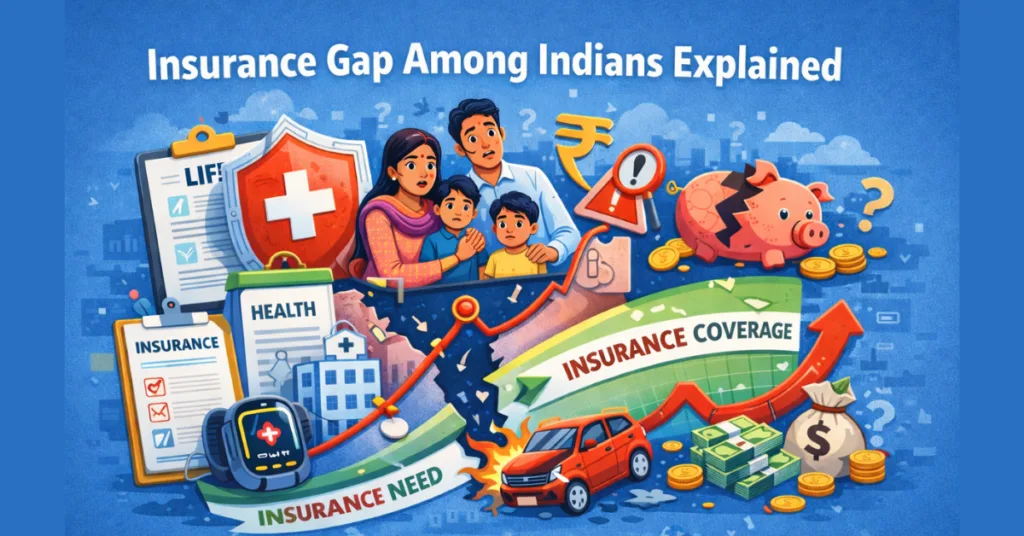
Why Most Indians Don’t Have Enough Insurance and What to Do About It India is growing quickly, with higher incomes, better living conditions, and higher hopes. Still, a lot of people are still in danger when it comes to protecting their money. In India, many people don’t realize they are underinsured until they have a medical emergency or lose someone unexpectedly. Even though more people know about it, millions of Indians either don’t have insurance or don’t have enough coverage. Let’s talk about why this happens and how you can fix it in a way that is both practical and cheap. What does it really mean to be underinsured? Not having enough insurance doesn’t always mean you don’t have any. A lot of the time, it means: In India, you can get health insurance with a low sum insured that won’t cover today’s hospital bills Only relying on coverage from your employer Having life insurance policies that don’t pay for lost income or help your family reach their goals In other words, your insurance looks good on paper, but it doesn’t work when you have to pay for things. Why Most Indians Don’t Have Enough Insurance “Insurance Is Expensive”—A Costly Myth A lot of people think that insurance premiums are too high, especially for good health or term plans. In fact, term life insurance is one of the most cost-effective ways to protect your money.  The real cost isn’t the premium; it’s not being protected. Relying too much on employer insurance Corporate health insurance seems easy, but it has some drawbacks: Coverage is often limited (₹2–5 lakh is common) It ends when you get a new job or retire. You can’t change features or add new ones. One of the main reasons people in India don’t have enough insurance is that they only rely on office coverage as medical costs go up. Not Knowing What Kind of Insurance You Need A lot of people buy insurance without thinking about it. People often don’t pay attention to questions like these: Will my health insurance cover a serious illness today? Can my life insurance pay for my living expenses for 15 to 20 years? People buy life insurance policies based on their feelings or peer pressure, not real planning, if they don’t have a good guide. Putting insurance and investment together People still like traditional policies because they “give returns.” But putting protection and investment together usually means low coverage and high premiums. Insurance should keep you safe. When protection is most needed, families are left vulnerable because they don’t know which one to choose. Putting off the decision A lot of Indians think that insurance can wait until they get married, have kids, or make more money. Sadly, health problems and accidents don’t wait. What does delaying mean? Later, higher premiums Risk of having your policy turned down Stress about money during emergencies The True Dangers of Not Having Enough Insurance One hospital stay can use up years of savings. After losing a family member who was the main breadwinner, they may need loans. Long-term goals like retirement or paying for your kids’ education are put on hold. Being underinsured doesn’t just hurt your wallet; it also hurts your dignity, choices, and peace of mind. The Right Way to Fix Underinsurance Get enough health insurance. Based on current prices, a simple rule of thumb for health insurance in India is: For families in big cities, they should have at least ₹10–15 lakh in coverage. A little less for areas outside of cities, but never very little Choose: Policies for individuals or families Super top-up plans that let you get more coverage for less money No limits on room rent and lifetime renewability Get Pure Term Insurance as soon as you can If you have people who depend on you, term insurance is a must. Important benefits of term insurance: A lot of coverage for a low price Money safety for your family You can relax knowing that your debts are paid. Your coverage should be 10 to 15 times your yearly income, taking into account any loans you have and your future goals. Separate your insurance and investments Use: Term life insurance for safety Health insurance for when you need medical care Use mutual funds, PPF, or NPS to build wealth. This clear separation makes sure you don’t have to give up safety for returns. Look over and update often Your insurance needs change when: Marriage and kids Increase in income New loans A yearly review makes sure you don’t stay underinsured without meaning to as your life changes. Don’t just trust agents; learn for yourself. Don’t rush or blindly trust your insurance choices. A simple, trustworthy guide to life insurance can help you: Know what the policy covers Look at your choices Stay away from common traps for mis-selling A buyer who knows what they’re doing is rarely underinsured. Last Thoughts Not having enough insurance in India isn’t just about not having enough money; it’s also about not being clear. With healthcare costs going up and life events that can’t be predicted, having enough insurance is no longer a luxury; it’s a need. The good news is? To fix underinsurance, you don’t need to pay a lot of money in premiums. You just need to make decisions on time, plan correctly, and buy the right products. If you need to, start small. If you can, start today. The best insurance policy is the one that really protects you when things don’t go as planned.

Insurance Gap Among Indians Explained Read More »

GST Composition Scheme: Who Should Choose or Avoid It?

Who Should Choose GST Composition Scheme and Who Should Not Many small business owners think that following the GST composition scheme and other GST rules is hard and takes a lot of time. Monthly returns, detailed invoices, input tax credit calculations — it can quickly become overwhelming. That’s why the GST composition scheme was made. It was designed to reduce compliance burden for small businesses and offer a simpler tax structure. But this is the most important question: Is it really beneficial for everyone?👉 Or can it actually limit your business growth? In this guide, we’ll explain who should and shouldn’t use the GST composition scheme and whether it really helps you save money on GST taxes. What is the GST Composition Plan? The GST composition scheme is a way for small taxpayers to pay their taxes that is easier. Instead of paying GST at regular slab rates (5%, 12%, 18%, 28%), businesses under this scheme pay tax at a fixed lower rate on total turnover. Current Eligibility (A Quick Look) If a business wants to, it can choose composition. The turnover can be as high as ₹1.5 crore (₹75 lakh in some special category states). They work in just one state. They don’t do some things that are not allowed. The main goal is to make GST easier for small businesses and manufacturers by lowering compliance. GST Rates for the Composition Scheme Traders: 1% of sales 1% of sales go to manufacturers. 5% for restaurants that don’t serve alcohol 6% for service providers (3% CGST + 3% SGST) under a special scheme These lower rates often draw in small business owners who want to save money on GST taxes. But there’s more to think about. Who Should Choose the GST Composition Scheme? Small Business Owners in the Area If you: Only sell in your state Don’t do business across state lines Don’t sell on e-commerce sites Can only claim a small amount of input tax credit Then the GST composition scheme can make it a lot easier for you to follow the rules. You pay a set amount of tax and file returns every three months instead of every month with detailed information. Businesses that Sell to Consumers (B2C Model) The composition scheme might work well if most of your customers are end users (not registered businesses). Because: People don’t ask for input tax credit Less compliance means lower costs for administration Easier way to bill In these cases, the GST tax savings come from having to do less paperwork, not just a lower tax rate. Small Restaurants Small restaurants that don’t serve alcohol and are located nearby can benefit from the lower 5% composition rate. It cuts down on: Difficult bookkeeping ITC matching Filing returns often Businesses that Don’t Spend Much on Inputs If your business doesn’t pay a lot of GST on purchases, losing the input tax credit won’t be a big deal. In that case, the lower composition rate might actually help you save money on GST. Who Should NOT Opt for GST Composition Scheme? Businesses That Sell Inter-State You can’t choose the composition scheme if you send goods across state lines. This plan is not good for businesses that are growing and want to grow even more. Companies That Sell Through E-Commerce Sites If you sell on Amazon, Flipkart, Meesho, or a site like that, you can’t do composition. So, sellers on the internet should keep their GST rates low. B2B Companies Customers who are GST-registered businesses prefer vendors who can give them an input tax credit. Under composition: You can’t collect GST on its own. You can’t send a tax bill. Buyers cannot claim ITC This could make you less competitive in B2B markets. Businesses that pay a lot of input tax You lose your input tax credit under composition if you often buy things with high GST rates. In these situations, regular GST may be cheaper and smarter. Businesses Planning Rapid Growth The composition scheme is good for keeping things stable, not for fast growth. Some of the limits are: Cap on turnover No growth between states Small ITC benefit If you want to grow, it’s usually better to register for GST on a regular basis. Does the Composition Scheme really help you save money on taxes? A lot of people think that a lower tax rate automatically means a lower GST tax. But that’s not always the case. When GST is regular: You make your customers pay GST. You ask for an input tax credit. You only pay the difference. In Composition: You pay taxes on all of your sales. No credit for input tax Can’t collect tax separately In some cases, regular GST may lead to a lower net tax after ITC adjustment. So the main benefit of the GST composition scheme is that it makes it easier to follow the rules, not always that it saves you money on taxes. Important Benefits of the GST Composition Scheme Lower tax rate Filing returns every three months Less paperwork Easy to figure out Less stress about following the rules Main Drawbacks No credit for input tax No sales between states No selling online Limited growth of the business Not as appealing to B2B clients Final Decision The GST composition scheme isn’t good or bad; it all depends on how your business works. It works best for: Small, local businesses Restaurants Companies that don’t pay much input tax Stable operations in one state It is not good for: Businesses that are growing Sellers on the internet Suppliers between states Industries that use a lot of ITC Before opting, calculate properly. Sometimes what looks like a way to save on GST taxes might actually lower your profit margins in the long run. 👉 Visit: blog.ezymoneydeals.com 📞 Need help? Contact our support anytime — we’re here for you!

GST Composition Scheme: Who Should Choose or Avoid It? Read More »

Term Insurance

Which is better in 2026: term insurance or ULIP?

Which is Better in 2026: Term Insurance or ULIP? Choosing the right Term insurance or life insurance plan is one of the most important financial decisions you’ll ever make. There are so many options, though, that it can be hard to know what to do. This is especially true when the market comes out with products that promise to protect you and give you a return on your investment. If you want to know the difference between term insurance and ULIP, you’re in the right place. This blog will help you choose the best life insurance plan for 2026 by talking about the differences, weighing the pros and cons, and giving you advice. This is especially for people in India who want to protect their future and make smart decisions about how to grow their money. What Are ULIP and Term Insurance? Before we compare the two products side by side, let’s first learn what each one is: Term Insurance Term insurance is a kind of policy that only protects you. You pay a set amount every month, and if something bad happens to you while the policy is in effect, your family will get a guaranteed death benefit. If nothing happens, there is no maturity benefit, and that’s how it should be. That’s why term policies are so cheap and do such a good job of protecting your money. ULIP (Unit Linked Insurance Plan) A ULIP is a kind of life insurance that lets you put money into stocks and bonds. Part of your premium goes to life insurance, and the rest goes into market-linked funds, which can be stocks, bonds, or a mix of the two. This means that ULIPs can give you insurance and a chance to make money, depending on how the market does. The Main Differences Between Term and ULIP There are two kinds of insurance: term insurance and ULIP (Unit Linked Insurance Plan). Main Goal: Safety vs Safety + Investment Returns Maturity Benefit: No benefit for maturity vs Possible returns that depend on the market Premium: Lower vs Higher (because it costs more to invest) Level of Risk: Low vs Market risk applies Transparency: Easy vs Moderate or hard Best For: Covering pure risk vs Investing for the long term with coverage This simple comparison of insurance in India shows why these products seem to serve very different needs. Why Term Insurance Is Still the Best in 2026 People like term plans for these reasons: Cheap and Covers a Lot of Ground Term plans can pay out 10 to 20 times your annual income for very low premiums. These are the best choices if your first goal is to be safe with your money. Easy to Understand There are no issues with how the fund performs, its fees, or switching funds. The Safest Life Insurance Plan Term life insurance is the best choice for most people, especially young people and parents, because it does what insurance is supposed to do: keep your family safe financially without any extras. What ULIPs Can Do for You ULIPs have changed over time, but they can still help you reach some goals: Wealth May Grow If you can handle the ups and downs of the market, ULIPs are a way to grow your money over time. Flexibility You can choose the mix of funds based on how much risk you’re willing to take (equity for growth, debt for stability). Goal-Based Investing ULIPs are good for long-term goals like saving for retirement or your kids’ education because they help your money grow and keep it safe. A Comparison of Term and ULIP from a Real Investor’s Perspective 1. If Your Number One Goal Is Safety Choose term insurance.You get a lot more coverage with term plans than with ULIPs for the same price. 2. If You Want Growth and Protection ULIPs can work, but only if you know how dangerous the market is and are willing to wait a long time (10 years or more). 3. If Money Is the Most Important Thing Term insurance is the best choice. 4. If You Are Saving for a Specific Reason ULIPs might be helpful, but only after you’ve gotten enough real protection. A Quick Look at the Costs and Fees Term Insurance Lowest premium Clear fees No chance of losing money ULIP More expensive premium Fees for managing funds Fees for switching Returns that are tied to the market (not guaranteed) This is why term plans are often the best option when looking at insurance in India, especially for people who want things to be simple and clear. Ideas for 2026 This is how to decide what to do next: To keep your money safe, buy a term plan first. Figure out how much coverage you need; aim for 10 to 20 times your yearly income. Know what you want: are you protecting or investing? Don’t mix them up without thinking. Know how much policies cost, especially ULIPs. Check every year because your needs change as your life does. The Final Choice: Term or ULIP Term insurance is better for most Indians in 2026 if their main goal is to feel safe and protected. It covers a lot for a low price, with no confusing extras. ULIPs can be useful, though, once you have enough protection and understand how they work, especially the fees and the market side of things. The best life insurance plan is one that will help your loved ones when things get tough. For a lot of people, term insurance does this in a clear and reliable way.

Which is better in 2026: term insurance or ULIP? Read More »

Mutual Funds

GST for Small Business – Things you need to know!

What is GST for Small Business? The truth is — GST for small business owners isn’t as complicated as it looks once you understand the basics. This guide breaks everything down in simple language, so even a complete beginner can understand how GST works, when it applies, and how to stay compliant without stress. If you run a small business in India, chances are you’ve heard the term GST more times than you can count. Yet, for many first-time entrepreneurs, freelancers, shop owners, and service providers, GST still feels confusing, intimidating, and overly technical. What Is GST and Why Was It Introduced? GST (Goods and Services Tax) is a single indirect tax that replaced multiple older taxes like VAT, service tax, excise duty, and others. It was introduced to create a uniform tax system across India, making business easier and more transparent. For small businesses, GST brought: One tax instead of many Online registration and filing Clear input tax credit system Better compliance tracking While the transition felt tough initially, GST has simplified long-term business taxation. Who Is Considered a Small Business Under GST? A small business typically includes: Sole proprietors Small traders and shop owners Freelancers and consultants Startups and online sellers Service providers and local manufacturers GST applies differently depending on your turnover, location, and type of business. When Is GST Registration Mandatory? Understanding GST registration rules is crucial to avoid penalties. You must register for GST if: 1. Your Annual Turnover Exceeds the Threshold ₹40 lakh for goods (₹20 lakh in special category states) ₹20 lakh for services (₹10 lakh in special category states) Once you cross this limit, GST registration becomes compulsory. 2. You Sell Online or Through Marketplaces If you sell via platforms like Amazon, Flipkart, Meesho, or Swiggy—even with low turnover—GST registration is mandatory. 3. You Do Inter-State Business Selling goods or services across state borders requires GST registration, regardless of turnover (with limited exceptions). 4. You Are a Casual or Non-Resident Taxable Person Temporary or foreign businesses operating in India must register under GST. When Is GST Registration Optional? If your turnover is below the threshold limit and you don’t fall into any mandatory category, GST registration is optional. _________________________________________________________________________ Some small businesses voluntarily opt for GST to: Claim input tax credit Appear more professional Work with large clients who prefer GST-registered vendors Types of GST for Small Businesses 1. Regular GST Registration Most businesses fall under this category and must: Charge GST File monthly/quarterly returns Claim input tax credit 2. Composition Scheme (For Small Businesses) The Composition Scheme is designed specifically for GST for small business owners with low turnover. Eligibility: Turnover up to ₹1.5 crore (₹75 lakh in some states) Benefits: Lower tax rates Fewer compliance requirements Quarterly returns Limitations: Cannot claim input tax credit Cannot sell inter-state Cannot sell via e-commerce platforms This scheme suits small traders and manufacturers with local operations. How to Do GST Registration (Simple Overview) GST registration is completely online and free on the GST portal. Basic steps: Visit the GST portal Fill business and personal details Upload documents (PAN, Aadhaar, address proof, bank details) Submit application Receive GSTIN after verification Once registered, you are legally allowed to collect GST. What Is GSTIN and Why Is It Important? GSTIN (Goods and Services Tax Identification Number) is a 15-digit unique ID given to every registered business. It is required for: Issuing GST invoices Filing returns Claiming input tax credit Dealing with vendors and clients Think of GSTIN as your business’s tax identity. Understanding GST Rates GST rates depend on what you sell. Key GST Slabs 2025 (Effective from Sept 22, 2025)  0% (Nil): Essential items, unprocessed food, and life-saving drugs. 5%: Essential items like dairy products (ghee, butter, cheese), edible oils, tea, spices, and medicines. 18%: Default standard rate for most goods and services, including electronics (washing machines, ACs), cars, and personal care product 40%: Luxury and sin goods, including aerated drinks, high-end cars, tobacco, and pan masala.    What Is Input Tax Credit (ITC)? Input Tax Credit means you can reduce your GST liability by claiming the GST you already paid on business purchases. Example: GST collected from customers: ₹10,000 GST paid to vendors: ₹6,000 GST payable to government: ₹4,000 This is one of the biggest advantages of GST—but only available to registered businesses. GST Returns: What Small Businesses Need to Know Once registered, filing returns is mandatory—even if there’s no business activity. Common returns: GSTR-1 – Sales details GSTR-3B – Summary and tax payment Quarterly filing (for small taxpayers under QRMP scheme) Late filing can attract: Late fees Interest Compliance notices Timely filing is critical for smooth operations. Common Mistakes Small Businesses Make in GST Delaying GST registration after crossing limit Choosing the wrong scheme Not filing nil returns Ignoring notices from GST department Mixing personal and business expenses Avoiding these mistakes can save money and legal trouble. Advantages of GST for Small Businesses? For small businesses that understand and follow it properly, GST can: Improve credibility Enable smoother expansion Allow tax savings through ITC Problems usually arise from lack of awareness, not GST itself. Final Thoughts GST may seem overwhelming at first, but once you understand the basics, it becomes manageable. For anyone running a small venture, knowing how GST for small businesses works and when GST registration is required is essential for long-term growth and compliance. Start smartly, stay compliant, and seek professional help if needed. A little clarity today can prevent big problems tomorrow. 👉 Visit: blog.ezymoneydeals.com 📞 Need help? Contact our support anytime — we’re here for you!

GST for Small Business – Things you need to know! Read More »

Common GST Filing Mistakes You Should Avoid

Common GST Filing Mistakes That Can Cause Big Problems for Your Business In India, GST is now a normal component of doing business. If you are registered under GST, you must file returns, preserve records, and follow the requirements, no matter how big or small your business is, to avoid common GST Filing Mistakes that can lead to penalties and compliance issues. You could get fines, interest, or GST letters for even tiny mistakes. Most of the time, people don’t mean to make mistakes. Most of the time, they happen because people are confused, don’t have enough time, or don’t properly comprehend the regulations. Here are the most typical GST mistakes outlined in simple terms, along with tips on how to avoid them. Not filing GST returns on time This is the mistake that happens most often. All registered taxpayers must file their GSTR-1, GSTR-3B, GSTR-4, and yearly returns on time. You still have to file a NIL return even if you didn’t buy or sell anything. If you file late, what happens? Every day, you will be charged a late fee. If you don’t pay your taxes, you will have to pay interest. You might not be able to file future returns. Your GST registration might not work anymore. How to stay away from this: Make a list of when things are due. Send in your returns before the due date. Don’t put it off until the final day. Errors in GSTR-1 (Sales Information) Your sales invoices are in GSTR-1. If you enter the erroneous information, it will damage your customer’s Input Tax Credit (ITC). Things that people often do wrong: The buyer gave the wrong GST number. The invoice number is wrong. The date on the invoice is wrong. The taxable value is wrong. The tax rate is wrong. A slight mistake in typing can cause problems. Caused problems: The customer can’t claim ITC. The payment can be late. The GST department may send a notice. How to stay away from this: Check invoices again before you upload them. If you can, don’t enter data by hand. Look over everything carefully before you file. Claiming an Input Tax Credit (ITC) Without Checking It ITC is a big benefit of GST, but you have to be careful when you claim it. Mistakes people often make with ITC: Claiming ITC without a real tax invoice. Claiming ITC on personal costs. Claiming ITC when the supplier hasn’t filed a return. Taking ITC on things that GST doesn’t allow. You can only get ITC if the supplier has posted the invoice and paid the tax. What could happen: ITC can be turned around. There will be interest charged. There may be a fine. You might have to go through an audit. Best way to do it: Every month, check the purchase information against GSTR-2B. Only claim ITC after checking it out. Keep in touch with your suppliers. What is the difference between GSTR-1 and GSTR-3B? GSTR-1 tells you about your sales. You pay taxes on GSTR-3B. The numbers on each should be the same. A lot of taxpayers have different numbers on both of their forms. This happens because Invoices that are missing. Mistakes in calculations. Filing quickly. Not matching up info. If they don’t match: You might get a notice. There may be interest. There may be a penalty. How to stay away from: Every month, make sure both returns match. Don’t utilize numbers that are just guesses. Fix mistakes in the next return the right way. Sending Wrong GST Invoices By law, a GST invoice must have certain information. Things that people often do wrong: No GST number. No serial number on the invoice. Wrong tax breakdown (CGST/SGST/IGST). There is no HSN or SAC code. Why it matters: The customer may lose ITC. During an audit, the invoice may be turned down. You could get a fine. Answer: Use the right format for GST invoices. Make sure you update your invoice template often. Give your employees the right training. Entering the wrong HSN or SAC code Under GST, every good and service gets its own HSN or SAC code. This code sets the tax rate. If you use the wrong code, you can pay more or less tax. Possible issues: Request for more tax. Interest and a fine. Problems during the audit. How to stay away from: Look carefully at the classification. If you’re not sure, get professional help. Not paying attention to GST notices When they get GST notices, a lot of business owners freak out and ignore them. This makes things worse. A lot of notices contain a deadline for replies. If you don’t pay attention to them: A hearing is not always necessary for an order. A big fine may apply. You can cancel your registration. The right way to go about it: Pay close attention to the notice. Answer before the deadline. Get expert help if you need it. Not keeping GST registration information up to date You need to amend your address, bank account, or business activity on the GST portal if they change. A lot of businesses forget to do this. Things that went wrong: Refunds are taking longer than expected. Problems with verification. Problems with compliance. Good habit: Look at your GST profile often. Make modifications right now. Filing Under the Wrong GST Plan Businesses may file returns under the wrong plan. For instance: The dealer of composition is making regular returns. Regular taxpayers file composition returns. Outcome: Incorrect tax calculation. Fees and interest. How to stay away from: Check every year to see if you still qualify. Before you file your return, make sure the scheme is correct. Not keeping good records GST law says that businesses must keep accurate records of their sales, purchases, stock, and tax payments. Audits can be difficult if records aren’t kept up to date. Issues: Hard to respond to notices. Estimated tax bill. If you don’t keep records, you will be fined. The best thing

Common GST Filing Mistakes You Should Avoid Read More »

Mutual Funds

Why Mutual Funds Are Attractive

Why Mutual Funds Are Attractive Professional Management What It Means: Your money is managed by experienced fund managers who make investment decisions based on research and analysis. Benefit: You don’t need to be a market expert to invest wisely. Diversification What It Means: Mutual funds invest in a wide variety of assets (stocks, bonds, etc.). Benefit: Reduces the risk of loss from a single investment; lowers overall portfolio risk. Liquidity What It Means: Most mutual funds (especially open-ended ones) can be bought or sold on any business day. Benefit: Easy access to your money when needed, unlike real estate or fixed deposits. Affordability What It Means: You can start with as little as ₹100–₹500 via SIPs (Systematic Investment Plans). Benefit: Accessible for all income levels; you don’t need a large capital to start investing. Regulated and Transparent What It Means: Mutual funds in India are regulated by the Securities and Exchange Board of India (SEBI). Benefit: Strong investor protection, transparent reporting, and fewer scams compared to unregulated investments. Tax Efficiency What It Means: Some mutual funds (like ELSS – Equity Linked Saving Scheme) offer tax benefits under Section 80C. Benefit: Potential to save on taxes while earning returns. Variety of Choices What It Means: There are funds for every risk appetite and financial goal—equity, debt, hybrid, international, etc. Benefit: You can tailor your investments to match short-, medium-, or long-term goals.  Comparison with Other Investment Options Feature Mutual Funds Fixed Deposits Real Estate Stocks (Direct) Risk Moderate (varies by type) Low Medium-High High Returns Moderate-High Low Moderate High (volatile) Liquidity High (open-ended funds) Low (premature penalty) Low High Expertise Needed None (managed by pros) None High High Tax Benefits (optional) Yes (ELSS) Yes (but taxed) Yes (if rented) Limited Final Thought : Mutual funds Mutual funds strike a strong balance between risk and reward, offer easy entry and exit, and are managed by experts, making them a smart choice for most investors—especially those without the time, knowledge, or risk appetite for more complex or less liquid investments.  

Why Mutual Funds Are Attractive Read More »

Mutual Funds

Why Investing is Better than Just Saving

Why Investing is Better than Just Saving  Saving = Storing | Investing = Growing       Saving Investing  Purpose Keep money safe Grow money over time  Where? Savings account, FD Mutual funds, stocks, gold, real estate  Returns 2% – 6% p.a. 10% – 15%+ p.a. (historical average)  Risk Very low Moderate to high (varies with product)  Outcome Protect money Build wealth and beat inflation Inflation Eats Savings If inflation is 6% and your savings earn 4%, you’re losing money in real terms. Year ₹1,00,000 in Savings @ 4% Real Value (After 6% Inflation) 1 ₹1,04,000 ₹98,113 5 ₹1,21,665 ₹90,153 Invest Grows Wealth Let’s say you invest ₹5,000/month in mutual funds (SIP): Duration Total Invested Expected Return (12%) Wealth Gained 10 years ₹6,00,000 ₹11.6 lakh ₹5.6 lakh 20 years ₹12,00,000 ₹49.9 lakh ₹37.9 lakh Investing turns savings into a powerful compounding machine.  Saving Alone Can’t: Beat inflation Grow wealth significantly Help achieve long-term goals (retirement, education, home)  Final Thought: “Saving keeps your money safe. Invest makes your money work for you.”  

Why Investing is Better than Just Saving Read More »